
Front Page
News
Previews
Reviews
Features
• Adios Amiga?
• Sex, Lies & Videogames
• Alien Vs Predator

Gamer Life
Feedback
Charts
Release Schedule
Diary
Next Week
Paper View
On the website:

Screenshot Xtra
Hints and Tips
Demos
Patches and Upgrades
Stream Lounge
Chat forum

|
|
 |
| Issue 15 - February 18, 1999
|
|
| |
|
Feature
|
| Adios Amiga? |
|
An epitaph... and a resurrection?
|
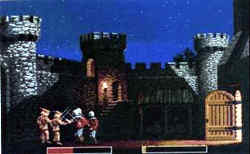
Defender of the Crown |
The Amiga was the star of the late '80s and early '90s and while the heady days of its fame and fortune are over, it remains to this day the unsung hero and innovator behind a wealth of modern videogame creativity.
Nick Veitch
If you wanted to get some play, back in the day, you went to the Amiga. At the height of its fame the machine offered unrivalled graphics and audio power, at an increasingly affordable price. Unlike 8bit micros, it offered a proper, efficient operating system, and there were certainly plenty of legitimate educational reasons for buying one. It was the committed gamer's choice and for many, a 'must have' machine.
The Amiga platform soon began to attract large publishers who had built their reputations on 8bit machines. Electronic Arts, US Gold, Gremlin and Ocean were some of the established names who began to gain dominance of the new and highly lucrative 16bit market.
It also fuelled the growth of newcomers to the industry, particularly in Europe. Numerous start-ups jumped into the fray, later to become major players in their own right (before they found themselves being bought out by the big players).
Psygnosis began on ST and Amiga, with immediate successes such as Shadow of the Beast, and later classics like Lemmings. Sensible Software gave the world the best football game of all time, Sensible Soccer, (not to be confused with the terrible PS version) and other innovative titles.
In fact, the list of start-ups specialising in Amiga, or Amiga and ST games is pretty impressive. Bullfrog started out with Populous (written entirely by Peter Molyneux), its inevitable sequel and Power Monger, before creating such enduring classics as Theme Park and Syndicate.
Amiga gamers who witnessed the excitement surrounding Command and Conquer on the PC and PlayStation may be excused for wondering what all the fuss was about. Far from being a groundbreaking first in a whole new genre, it was merely a derivative of Westwood's earlier creations, Dune and Dune II for the Amiga.
|
|


